|
|
< |
|
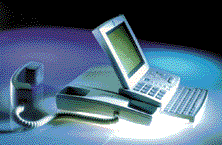
Navitel TouchPhoneWindows CE-based phone
Pssst, your phone is trying to tell you something! Now, when it's finished ringing, it will start beeping to inform you of the news, weather, sports scores, even email and voicemail. Navitel has melded both phone and computer into a hybrid system that will whirl any techno-jockey into a deliriously happy frenzy. In a world of WebTV, computer-controlled appliances, and perpetual focus on the Internet, the TouchPhone attempts to meld a common household device with uncommon technology, and the timing couldn?t be better. Slated for release in August, the Microsoft Windows CE-based TouchPhone will arrive in an era where this mini-OS has penetrated the handheld market, and the consumer knowledge level should be high enough to accept such a specialized product without a complete re-education. But it isn?t just the implementation of Windows CE that makes this phone so good, it's the excellent feature set. When you first look at the system, you might wonder where the phone exists at all. The incredibly clear 640x480 pixel screen (on the high-end model) doesn't dominate the device, but does attract your attention because of the graceful styling and the fact that information is practically leaping off the screen at you. Since the computer routes or controls most of the phone functions, some sophisticated special features are simple to implement. As you dial, the phone shows you a list of names and numbers it has stored that match the numbers you have entered so far. If you begin dialing mom's number, it filters out all others until you can simply press her name on the display, and it will complete the number. This is especially handy if you forget the last few digits of a friend's phone number, but don't want to scroll through your list of 2,000 names. Caller ID screens your calls and links phone book entries to phone messages left on the system; each message has a name attached to it, and you can return the call by a touch of a button. And finally, Navitel has implemented the ultimate new-user override; trying to pick up the phone while the modem is in use triggers a message on the screen warning the user and offering to disconnect the modem to free the phone line. This should be a welcome feature for any user who has had a family member sever a connection to the Web. Can you CE the difference? If you're asking yourself why Navitel would bother using the Windows CE OS at all, there is a simple reason: expandability. Developers can create custom applications for the TouchPhone and, although the phone is still in the developmental stage, Navitel engineers report that some or all of the TouchPhone's hardware may be accessed by developers. Since Web browser technology is constantly changing, the use of Pocket Internet Explorer will allow fast updates and use an industry standard. Navitel company representatives also added that Windows CE provides the powerful graphics interface and features that the TouchPhone requires. E.T. email home The TouchPhone features an impressive level of integration of Caller ID, voicemail, and computer-assisted dialing functions. One Navitel employee mentioned that IP faxing (faxing over the Internet) technology is in the works. And a last minute change that Navitel just implemented is a full laptop keyboard into the slide out drawer on the unit, since user tests show that the smaller keyboard isn't acceptable. For satisfying your online needs, the TouchPhone has two separate Internet functions: it works like a standard Internet terminal, collecting email from standard POP3 email servers and browsing the Web using any Internet service provider (ISP). But when used with Navitel?s planned access provider (a partner not yet announced), the TouchPhone becomes a powerful news service. Using the popular "push" technology made popular by PointCast, the phone will dial in at user-selected intervals (or can maintain a constant connection on a second phone line) and will download news, sports, weather and user selected stock quotes all available at the touch of a button. Navitel has modified Windows CE to create the first example of a computer OS system running on a household appliance. The TouchPhone is a useful device that deserves your attention. Navitel Corporation <www.navitel.com> |
||
[Features] [Showcase] [Developer] [Members] [Subscribe] [Resources] [Contacts] [Guidelines] All contents ©1995-1998 Pen
Computing Magazine, Inc. All rights reserved. |